

Boxing for Parkinson’s Disease: Speed Bags, Heavy Bags, and Proven Training Tools
Parkinson’s disease affects nearly one million Americans, impacting movement, balance, coordination, and confidence in daily life. While there is no cure, research continues to show that boxing for Parkinson’s disease can significantly improve quality of life.
At Balazs Boxing, we’ve seen firsthand how non-contact boxing training for Parkinson’s - using speed bags, heavy bags, and shadow boxing - helps people move better, think sharper, and feel empowered in their fight against the disease.
Why Boxing Training Works for Parkinson’s Disease
Boxing uniquely addresses many Parkinson’s-related challenges by combining physical movement with cognitive engagement. Unlike traditional exercise routines, Parkinson’s boxing training incorporates:
- Rhythm and timing
- Hand-eye coordination
- Balance and footwork
- Reaction speed and decision-making
Programs such as Rock Steady Boxing have shown that boxing exercises for Parkinson’s patients can improve balance, gait, daily functioning, and overall quality of life. The varied movements promote neuroplasticity, supporting the brain’s ability to form new motor pathways.
Speed Bag Training for Parkinson’s Disease
The speed bag is one of the most effective boxing tools for Parkinson’s because it emphasizes rhythm, repetition, and coordination.
Benefits of Speed Bag Work
- Rhythm & Timing: Helps reduce freezing episodes and improve movement initiation
- Hand-Eye Coordination: Reinforces visual-motor control
- Bilateral Movement: Engages both sides of the brain
- Upper-Body Mobility: Reduces rigidity in shoulders, arms, and wrists
- Cognitive Focus: Requires sustained attention and pattern recognition
- Immediate Feedback: Builds confidence and motivation
Speed bag training can be modified using slower rhythms, lighter bags, or shorter sessions, making it accessible at any stage.
Recommended Equipment:
Essential Boxing Exercises for Parkinson’s Patients
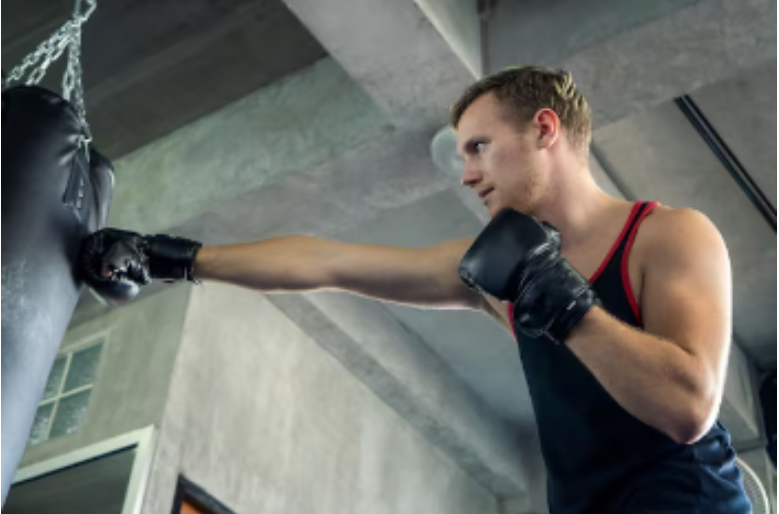
Heavy Bag Training
Heavy bag workouts promote posture, strength, and full-extension movements that counter Parkinson’s-related rigidity. They also improve cardiovascular fitness and bone density.
Recommended Equipment:
Shadow Boxing
Shadow boxing improves balance, coordination, and exaggerated movement patterns often recommended by physical therapists. It requires minimal equipment and can be done anywhere.
Focus Mitts & Partner Drills
Partner drills add reaction time and unpredictability, improving cognitive-motor integration and mental processing speed.
Jump Rope
Modified jump rope movements - such as stepping patterns or mimicking the motion - can improve rhythm and coordination without requiring full jumps.
Getting Started Safely
- Consult healthcare providers before starting
- Seek Parkinson’s-specific boxing programs
- Focus on form over force
- Be consistent
- Adapt intensity day to day
Psychological Benefits
Boxing helps shift mindset from patient to fighter. Participants often report improved confidence, reduced anxiety, and greater motivation - benefits that extend beyond physical health.
Building a Parkinson’s-Friendly Home Boxing Gym
A simple home setup may include:
- Adjustable speed bag platform
- Securely mounted heavy bag
- Quality training gloves
- Open floor space
Explore Balazs Boxing’s Home Gym Equipment
Moving Forward
Boxing offers a dynamic, empowering way to manage Parkinson’s disease. With the right equipment and consistent practice, boxing training supports independence, confidence, and quality of life.
At Balazs Boxing, we’re proud to support everyone using boxing as a tool for health and resilience.
This article is for informational purposes only and does not replace professional medical advice.
Related Articles
7 Tips How to Increase Stamina for Boxing
12/16/2025
Comments (0)
Leave a Comment
No comments yet. Be the first to comment!