
Boxing Shoulder Workout: Best Shoulder Training and Endurance Exercises for Boxers
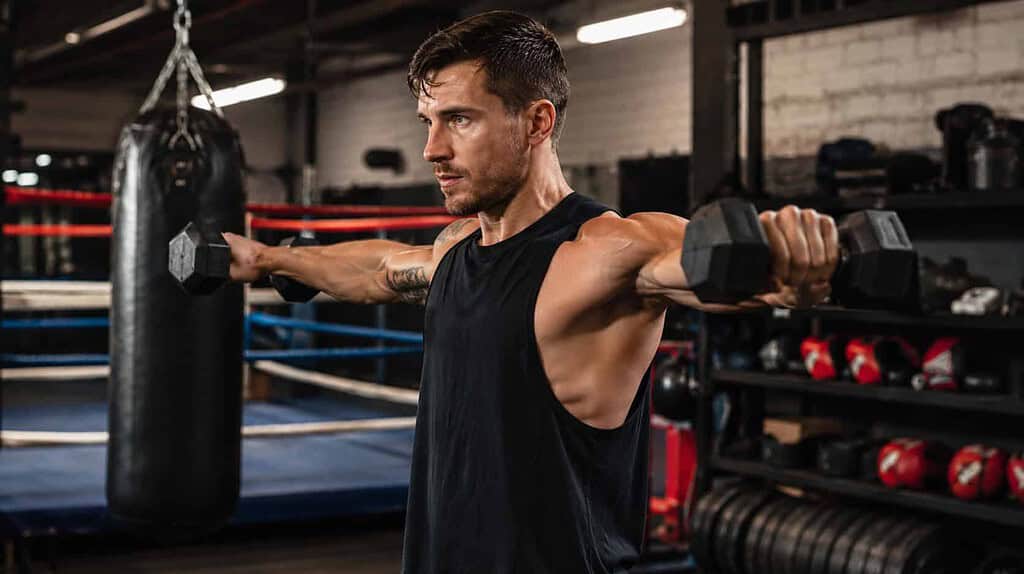
Ask any experienced boxer what burns first in a long fight, and the answer is almost always the shoulders. That constant guard position, round after round of punching, head movement, and clinch work – it all demands more from your deltoids than most gym routines ever prepare you for. A well-designed boxing shoulder workout doesn’t just build size; it builds the functional strength and durability your shoulders need to perform when it counts. Whether you’re working on shoulder training for boxing to boost punch output, targeting shoulder exercises for boxing to improve your guard stability, or focusing on shoulder endurance exercises to stop gassing out by round three, this guide covers it all. These are the best shoulder exercises for boxing – tested, practical, and built around the demands of the sport.
Why Shoulder Training for Boxing Is Different From Regular Gym Work
Most gym shoulder programs prioritize aesthetics – big, round deltoids built through isolation work like lateral raises and overhead press variations. Boxing shoulder training has a different goal entirely: endurance, stability, and functional strength across a full range of motion under fatigue.
The Shoulder’s Role in Every Punch
Every punch you throw – jab, cross, hook, uppercut – travels through your shoulder joint. The deltoids, rotator cuff, and surrounding stabilizers are all working together to generate, guide, and absorb the force of each shot. Weak or underdeveloped shoulders don’t just limit punch power; they break down faster under sustained output, leading to dropped hands, sloppy technique, and vulnerability late in rounds.
Guard Fatigue Is a Real Problem
Keeping your hands up for the duration of a fight is harder than it sounds. Isometric endurance – the ability to hold a position under sustained tension – is rarely trained in conventional workouts but is absolutely critical in boxing. Training specifically for guard endurance makes your defensive structure automatic and reliable, even when you’re tired.
Injury Prevention Starts in the Shoulders
The rotator cuff is one of the most commonly injured structures in combat sports. Targeted shoulder training strengthens the small stabilizing muscles that support the joint, reducing the risk of tears, impingement, and overuse injuries. Prehabilitation through consistent shoulder work is far less costly than rehabilitation after an injury takes you out of training.
Best Shoulder Exercises for Boxing: Build Strength and Power
These exercises build the raw strength and structural integrity your shoulders need to throw and absorb punches effectively. Pair your training sessions with quality boxing equipment to get the most out of every rep.

Dumbbell Arnold Press
The Arnold Press cycles through the full range of shoulder rotation, hitting all three heads of the deltoid – anterior, medial, and posterior. For boxing, this rotational component mirrors the mechanics of punch delivery and makes this movement more sport-specific than a standard overhead press. Perform 3-4 sets of 10–12 reps.
Landmine Press
The landmine press develops pressing strength at an angle that closely resembles the path of a cross or overhand. It’s joint-friendly and allows heavier loading than pure overhead pressing, making it excellent for building functional upper-body power without stressing the shoulder capsule. Use 3 sets of 8–10 reps per side.
Face Pulls
Face pulls are one of the most underrated exercises in any boxer’s program. They strengthen the rear deltoid and external rotators – the muscles responsible for keeping punches controlled on the return and maintaining healthy shoulder mechanics over time. Either the cable machine or the band version works. Aim for 3 sets of 15–20 reps.
Pike Push-Ups
A bodyweight option that requires no equipment, pike push-ups load the deltoids at the top of the shoulder’s range of motion. They also train the kind of relative strength that transfers to in-ring movement. Add them to warm-ups or as a finisher at the end of shoulder sessions.
Shoulder Endurance Exercises for Boxers: Last Longer in Every Round
Strength matters, but endurance is what keeps your guard up in round eight. These shoulder endurance exercises are specifically designed to build the stamina your shoulders need for sustained ring work. Complement your endurance training with supportive training accessories like resistance bands and hand wraps that protect your joints during high-rep sessions.
Band Punch-Outs
Attach a resistance band to a fixed point at chest height and perform rapid, alternating punch-outs for timed intervals – 30 to 60 seconds per set. This drill replicates the muscular demands of throwing combinations and is one of the most direct shoulder-endurance exercises available to boxers. The constant tension from the band loads the return motion as well, building complete-cycle shoulder conditioning.
Plate Holds and Lateral Raises
Holding a light weight plate at arm’s length – or performing slow, controlled lateral raises – seems deceptively simple. Under time (hold for 60 seconds, or perform 25–30 slow reps), the burn becomes significant. This type of isometric and slow-tempo work builds the guard-endurance that fighters need when their arms feel like lead in later rounds.
Shadowboxing With Light Weights
Adding 1–3 lb dumbbells to shadowboxing rounds is a classic conditioning method used by professionals worldwide. The added resistance forces your shoulders to work harder through every combination while maintaining correct punching mechanics. Keep the weight very light – the goal is fatigue through volume, not strength through load. Three to five rounds of this, alongside your boxing core workouts, creates a complete conditioning circuit.
Battle Ropes
Battle ropes deliver cardiovascular conditioning and shoulder endurance simultaneously. Wave patterns, slams, and alternating movements challenge the shoulders through varied planes of motion – exactly the kind of unpredictable demand boxing places on the body. Research from the Journal of Strength and Conditioning Research highlights battle ropes as a high-intensity tool for developing upper-body muscular endurance, particularly in athletes who need sustained output over time.
How to Structure a Boxing Shoulder Workout
Knowing the exercises is one thing – knowing how to organize them into an effective session is another.
Sample Workout Structure
Warm-Up (5–10 minutes) Band pull-aparts, arm circles, face pulls (light), and pike push-ups to activate the rotator cuff and increase blood flow before loading.
Strength Block (20–25 minutes) Arnold Press – 4 sets × 10 reps Landmine Press – 3 sets × 8 reps per side Face Pulls – 3 sets × 15 reps
Endurance Block (15–20 minutes) Band Punch-Outs – 4 rounds × 45 seconds Shadowboxing with light weights – 3 rounds × 3 minutes Lateral Raise Holds – 3 sets × 60 seconds
Cool-Down (5 minutes) Cross-body shoulder stretch, doorway chest opener, and thoracic spine rotation to maintain joint mobility and reduce post-training tightness.

How Often Should Boxers Train Shoulders?
According to guidelines from the American College of Sports Medicine, muscle groups generally need 48 hours of recovery between sessions. For boxing-specific shoulder work, two dedicated sessions per week – plus the integrated shoulder demands of bag work, sparring, and shadowboxing – is typically sufficient to drive improvement without overtraining.
Pairing Shoulder Work With the Rest of Your Program
Shoulder training should complement, not compete with, your boxing sessions. Schedule strength-focused shoulder work on days that don’t precede heavy sparring. Save endurance-focused shoulder drills for the end of boxing sessions, when you’re already in a fatigued state and conditioning transfer is highest.
Conclusion
Strong, durable shoulders aren’t a luxury in boxing – they’re a requirement. A smart boxing shoulder workout that balances strength development with targeted shoulder endurance exercises will keep your guard up, your punches sharp, and your joints healthy over a long training career. Focus on the fundamentals: build strength through the full range of motion, train endurance under fatigue, and recover properly between sessions. Consistency over time is what separates fighters who fade in the late rounds from those who finish stronger than they started.
FAQ
What is the best shoulder exercise for boxing beginners?
Face pulls and band punch-outs are ideal starting points. They’re low-injury-risk, build the specific endurance and stability beginners need, and don’t require heavy loads to be effective.
How long does it take to build shoulder endurance for boxing?
With consistent training two times per week, most fighters notice meaningful endurance improvements within 4 to 8 weeks. Maintaining that improvement requires continued progressive overload – increasing time, resistance, or volume over time.
Can I train my shoulders the same day as boxing?
Yes, with smart programming. Strength-focused shoulder work is best done on separate days. Endurance-focused shoulder exercises can be added at the end of a boxing session as a conditioning finisher.