

Rehydration Clause in Boxing: What It Is and Understanding No Rehydration Rules
Weight management has always been a critical part of professional boxing. Fighters often cut weight before official weigh-ins to compete in a lower weight class, then regain weight before stepping into the ring. However, certain fights include a rehydration clause, a rule that limits how much weight a boxer can regain after the weigh-in.
Understanding the rehydration clause in boxing is important for fighters, trainers, and fans alike. Many people ask what a rehydration clause is and why it exists. Essentially, it is a contractual rule that restricts how much a fighter can rehydrate or regain weight between the official weigh-in and fight night. Some bouts even include a no rehydration clause, which can significantly influence how fighters prepare and manage their bodies.
These rules have become more common in high-profile fights, particularly when one fighter believes their opponent might gain a major size advantage after the weigh-in. In this guide, we’ll explain what a rehydration clause is, how the rehydration clause in boxing works, why some fights include a no rehydration clause, and how these rules impact fighters and training strategies.
What Is a Rehydration Clause in Boxing?
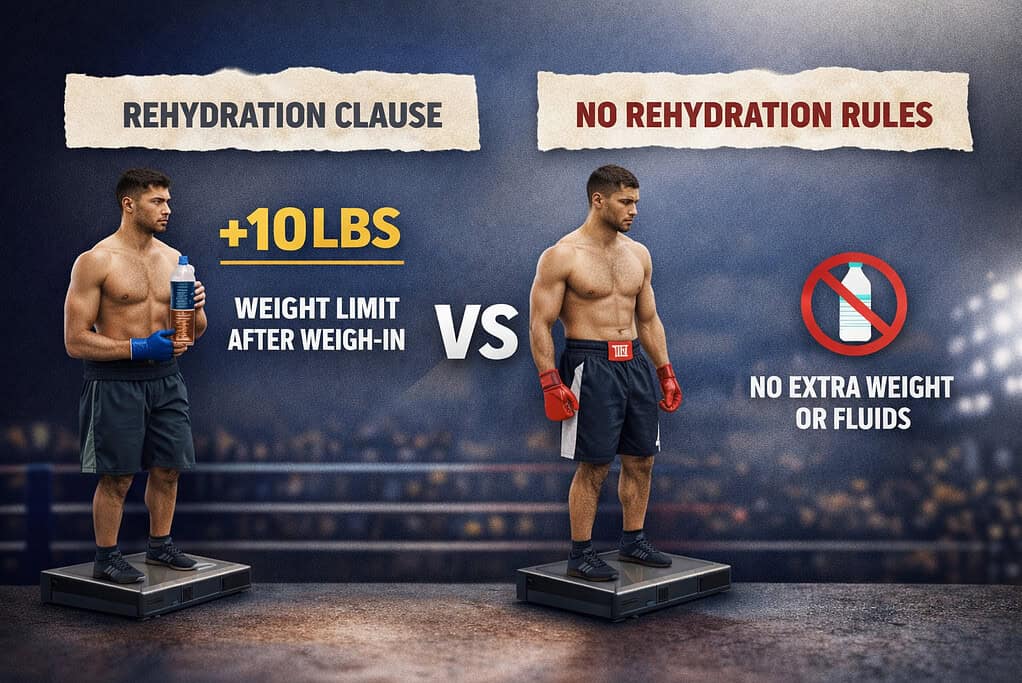
A rehydration clause is a contractual condition included in some boxing matches that limits the amount of weight a fighter can regain after the official weigh-in. The purpose of the rule is to prevent extreme weight cutting followed by significant weight gain before the fight.
For those wondering what a rehydration clause is, the concept is fairly straightforward. Fighters weigh in the day before the match, and under normal circumstances, they can regain as much weight as they want through hydration and nutrition. However, when a rehydration clause in boxing is included, fighters must stay below a specific weight limit at a secondary weigh-in.
Why Rehydration Clauses Exist
Weight cutting has long been a controversial aspect of combat sports. Fighters often dehydrate themselves to make weight and then rapidly regain pounds afterwards.
The rehydration clause in boxing was introduced to:
- Reduce dangerous weight-cutting practices
- Prevent fighters from gaining an unfair size advantage
- Promote fighter safety and fairness in competition
Organizations and promoters sometimes agree to these clauses when there is concern that one fighter may significantly outweigh the other on fight night.
Secondary Weigh-Ins
A rehydration clause usually requires fighters to participate in a second weigh-in on the morning of the fight. If a boxer exceeds the allowed weight gain, they may face penalties such as financial fines or even cancellation of the bout.
These additional weigh-ins help ensure that fighters follow the terms of the agreement.
How the Rehydration Clause in Boxing Affects Fighters
The rehydration clause in boxing can dramatically influence how fighters train, cut weight, and prepare for a fight.
Changes in Weight-Cutting Strategies
Normally, boxers cut significant water weight before the official weigh-in and then regain much of it afterwards. However, when a rehydration clause is present, fighters must carefully manage their weight so they do not exceed the secondary weigh-in limit.
This forces athletes to adopt more controlled and gradual weight-cutting strategies rather than extreme dehydration methods.
Nutrition and Recovery Planning
Because fighters cannot regain unlimited weight, nutrition becomes even more important. Proper hydration, electrolyte balance, and recovery protocols must be carefully monitored.
Training equipment and conditioning tools, such as speed bag boxing gear and other boxing training equipment, play a key role in helping fighters maintain peak conditioning without drastic weight fluctuations.
Impact on Fight Performance
The rehydration clause in boxing can affect stamina, power, and overall performance. Fighters who are unable to fully rehydrate may feel weaker or less energetic during the fight.
Because of this, fighters and trainers must balance weight management with performance readiness.
What Is a No Rehydration Clause?
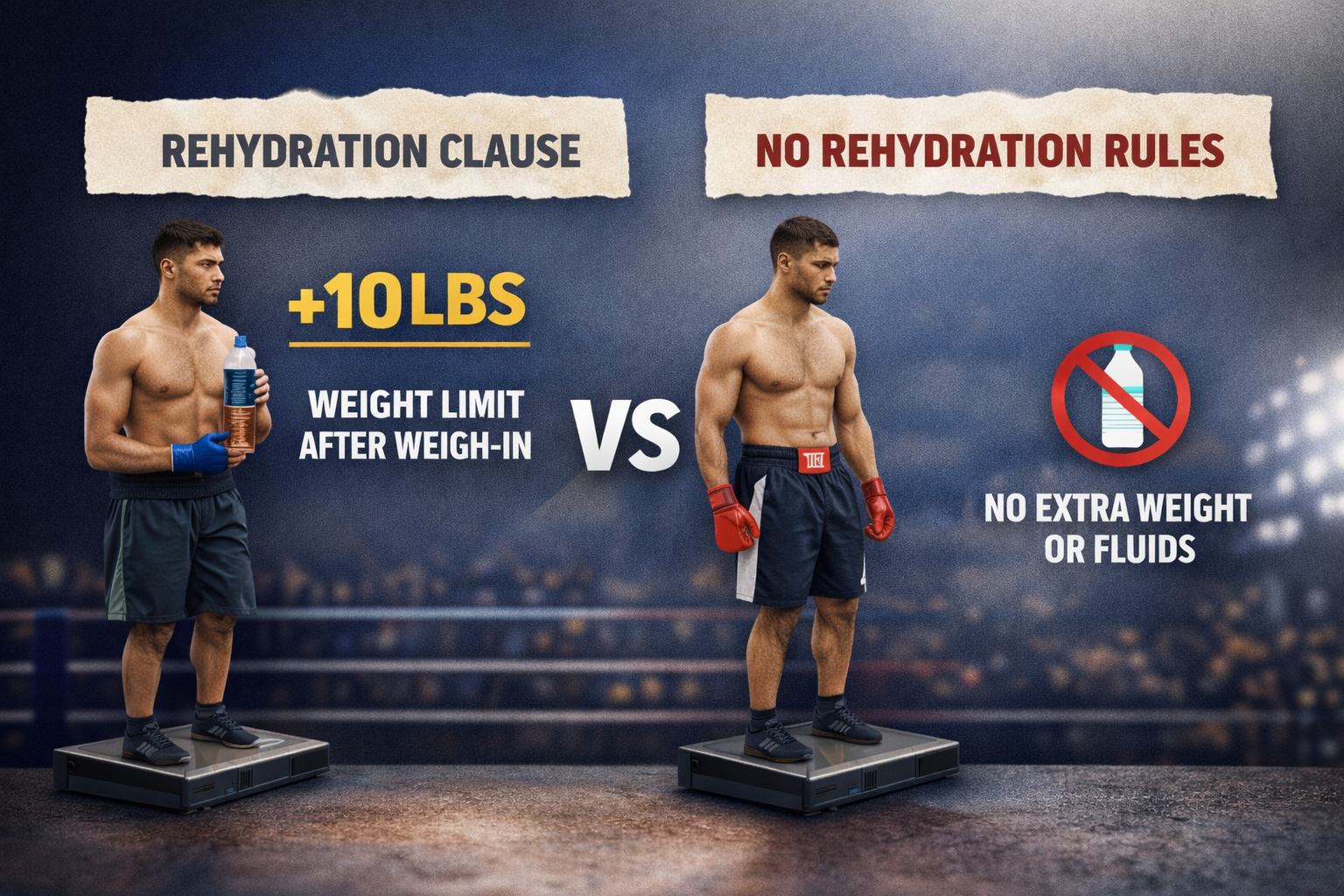
A no rehydration clause is a stricter version of the standard rehydration rule. In this case, fighters are not allowed to gain any significant weight after the official weigh-in beyond the contracted limit.
Why No Rehydration Clauses Are Used
Promoters sometimes include a no rehydration clause when they want to ensure both fighters remain close to the agreed weight class.
This can happen when:
- One fighter is known for cutting a large amount of weight
- A champion is defending a title against a naturally larger challenger
- A bout takes place near the limit of multiple weight classes
These clauses aim to maintain competitive balance and protect fighters from large weight disparities.
Controversy Around Rehydration Clauses
Some fighters and trainers criticize the rehydration clause in boxing, arguing that it interferes with natural recovery after weigh-ins.
However, others support the rule because it discourages dangerous weight-cutting practices and promotes safer competition.
The Association of Boxing Commissions has also highlighted concerns about extreme weight cutting in combat sports.
Training and Conditioning When Rehydration Rules Apply
When a rehydration clause is part of a fight contract, fighters must adapt their training routines accordingly.
Focus on Natural Conditioning
Instead of relying heavily on dehydration to make weight, fighters focus on improving their natural conditioning and maintaining lean muscle mass.
Training with equipment such as heavy bag mounts helps boxers develop power while maintaining controlled body weight.
Consistent Training Environment
Having the right training setup also makes preparation easier. Many fighters train with a punching bag stand or heavy bag system that allows them to maintain consistent workouts without relying on gym access.
These tools help athletes maintain conditioning levels while keeping their weight under control.
Smart Recovery Practices
Recovery becomes especially important when a no rehydration clause is involved. Fighters must monitor hydration carefully and avoid drastic weight fluctuations that could affect their energy levels on fight night.
Conclusion
The rehydration clause in boxing plays an important role in regulating weight management and maintaining fair competition. By limiting how much weight fighters can regain after weigh-ins, the rule helps prevent extreme weight-cutting practices and promotes safer conditions inside the ring.
Understanding what a rehydration clause is and how a no rehydration clause works allows fans and athletes to better appreciate the challenges fighters face when preparing for major bouts. Weight management, nutrition, and conditioning all become even more important when these rules apply.
For athletes looking to improve their boxing training and conditioning, having the right equipment can make a big difference. Explore high-quality boxing gear and training systems from Balazs Boxing to support your workouts and take your performance to the next level.
FAQ
What is a rehydration clause in boxing?
A rehydration clause in boxing is a contractual rule that limits how much weight a fighter can regain after the official weigh-in. It typically involves a secondary weigh-in to ensure the limit is respected.
Why do some fights have a no rehydration clause?
A no rehydration clause is used to prevent one fighter from gaining a large weight advantage before the fight. It helps ensure both competitors remain close to the agreed weight class.
Is the rehydration clause common in boxing?
While not present in every fight, the rehydration clause has become more common in major championship bouts or high-profile matchups.