
Speed Bag Benefits: Purpose, Uses, and Muscles Worked

If you’ve ever watched a boxer train, you’ve likely seen the hypnotic rhythm of fists hammering a small, air-filled bag mounted at eye level. That compact piece of equipment is the speed bag – and it’s one of the most underrated tools in combat sports conditioning. Whether you’re a seasoned fighter or a fitness enthusiast just getting started, understanding speed bag benefits can completely transform your training routine. In this guide, we’ll break down the purpose of a speed bag, what it’s used for, and exactly which muscles it works so you can train with more intention and get better results.
What Is the Purpose of a Speed Bag?
At its core, the purpose of a speed bag is to develop the fundamental athletic skills that make a fighter effective in the ring: timing, rhythm, hand-eye coordination, and striking speed. Unlike a heavy bag, which is primarily designed to build power and knockout strength, the speed bag is all about finesse, consistency, and neurological precision.
When you hit a speed bag, it bounces off the rebound platform and returns toward you in a predictable arc. Your job is to keep it moving with a steady, rhythmic cadence. Miss your timing – even by a fraction of a second – and the bag swings erratically. This instant feedback loop forces your brain and body to synchronize, building the kind of neurological efficiency that carries over directly into sparring, pad work, and competition.
What makes the speed bag especially valuable is that it trains a skill that’s hard to develop on stationary targets: dynamic timing. In a real bout, your opponent is always moving, so your strikes must land on a moving target at precisely the right moment. The speed bag conditions your reflexes to operate in that environment naturally.
Why Timing Is the Foundation of Boxing
Timing is arguably the single most important skill in boxing, and no piece of training equipment develops it more directly than the speed bag. Every strike requires you to anticipate the rebound and meet the bag at exactly the right moment in its arc. Over weeks of consistent training, this sharpens your reflexes and teaches your nervous system to fire faster – a quality that’s nearly impossible to build on a still, unresponsive target. Fighters with elite timing consistently land cleaner shots and avoid more punches, regardless of size or power.
How the Speed Bag Builds Rhythm and Flow
Rhythm in boxing isn’t just aesthetic – it governs your defensive movement, combination flow, and energy efficiency across a full fight. The speed bag teaches you to maintain a consistent beat under physical and mental fatigue, closely mirroring the demands of a real bout. Athletes who train regularly on speed bags often report that their combinations feel more fluid and automatic over time, and that they recover faster between exchanges because their movement has become more economical.
What Is a Speed Bag Used For?
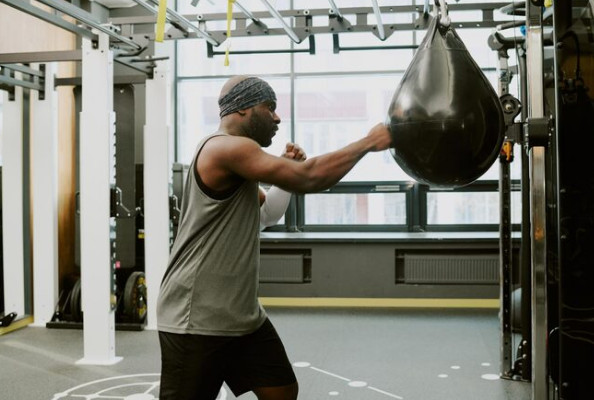
Beyond its core role in timing development, the speed bag serves several important functions across different training goals. Here’s a detailed breakdown of what a speed bag is actually used for and why each application matters:
Cardiovascular Conditioning: Maintaining continuous striking for 3–5 minute rounds drives your heart rate into a meaningful aerobic zone. The speed bag is one of the best low-impact cardio tools available – it keeps you moving and your heart working without the joint stress associated with running, jumping rope, or plyometric drills. For athletes managing lower-body injuries or joint sensitivity, it offers an effective conditioning alternative.
Hand Speed Development: Consistent, high-repetition speed bag work trains your fast-twitch muscle fibers to fire more rapidly and recover faster between contractions. If you want to know how to get faster hands in boxing, the speed bag is one of the most direct and evidence-backed answers. The rapid rebound cycle forces your arms to accelerate and decelerate repeatedly, conditioning the exact neuromuscular pathways that produce quick combinations.
Focus and Concentration Under Fatigue: The speed bag demands your complete, undivided attention. It’s a form of active meditation – any lapse in focus immediately disrupts your rhythm and shows up in your technique. Training your concentration under physical exertion builds the mental discipline that translates into sharper ring awareness and better decision-making in the later rounds of a fight.
Shoulder Endurance: Holding your hands at face level for extended rounds builds the shoulder endurance that’s critical for maintaining your guard when your body wants to let it drop. Many fighters lose their defense in the later rounds simply because their deltoids are exhausted. Regular speed bag work directly addresses that weakness.
Warm-Up and Active Recovery: Many coaches use the speed bag at the start of a session to warm up the shoulders and establish rhythm before heavier training, or at the end as a low-intensity activity that keeps blood circulating without further taxing a fatigued body. It’s a versatile tool that fits naturally at multiple points in a training session.
The Role of the Speed Bag Platform in Your Setup
The effectiveness of your speed bag training depends significantly on a proper installation. A quality speed bag platform positions the bag at the correct height – the bottom of the bag should align roughly with your chin – and provides the solid, stable surface needed for a consistent, predictable rebound. A platform that flexes, wobbles, or absorbs too much energy will throw off your timing and make it genuinely difficult to develop proper technique, especially as a beginner. Investing in the right platform is just as important as choosing the right bag.
Speed Bag Training for Non-Boxers
You don’t have to be a fighter to get real value from speed bag work. Fitness enthusiasts, martial artists, tennis players, and athletes from a wide range of sports use it to build coordination, shoulder conditioning, and mental focus. The cardiovascular demand is real, the muscle engagement is substantial, and frankly – it’s a lot of fun. There’s a reason speed bag training videos are some of the most watched content in the combat sports world.
Speed Bag Muscles Worked
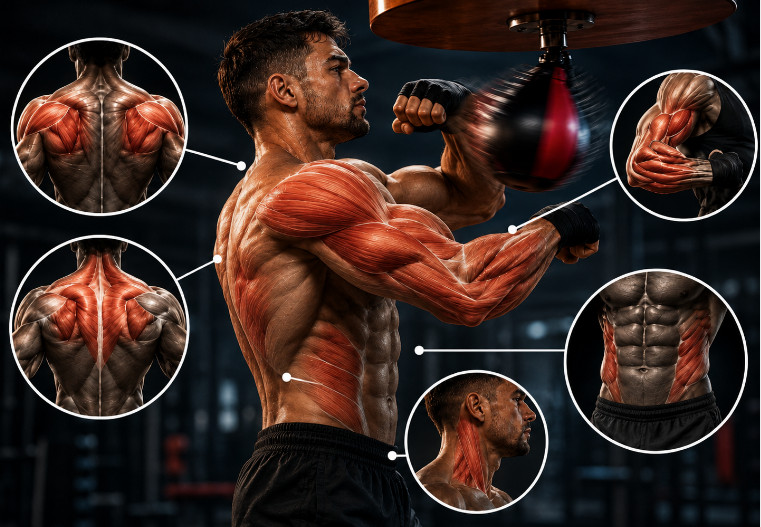
One of the most common questions newcomers ask is: what muscles does a speed bag work? The answer is far more comprehensive than most people expect. Speed bag training is effectively a full upper-body conditioning workout that engages multiple muscle groups in a sustained, integrated way.
Shoulders (Deltoids)
The deltoids are the primary muscles worked during speed bag training. Holding your hands at face level and repeatedly driving strikes requires constant shoulder activation across all three heads of the deltoid. This builds the muscular endurance needed to maintain your guard for an entire fight – something even experienced boxers struggle with as rounds accumulate. For fitness-focused athletes, the deltoid conditioning from the speed bag contributes to a well-rounded, functional upper body.
Arms – Biceps, Triceps, and Forearms
Every punch and rebound strike engages your biceps during arm retraction, your triceps during extension, and your forearms for stabilization and wrist control. Because the speed bag demands rapid, continuous movement, it builds dense functional endurance in these muscles rather than bulk or maximum strength. This type of conditioning is particularly valuable for fighters, who need arms that can perform for 10–12 rounds without breaking down.
Core and Rotational Muscles
Proper speed bag technique involves subtle but consistent trunk rotation on each strike. Over time, this repeatedly engages the obliques, transverse abdominis, and the stabilizing muscles of the lower back in a rhythmic, sustained way. It won’t replace dedicated core training, but it meaningfully reinforces the rotational stability that powers effective punching and protects the spine under load.
Upper Back and Traps
Maintaining posture and shoulder position throughout a full speed bag session activates the trapezius and rhomboids along the upper back. These muscles are chronically underdeveloped in gym-goers who prioritize pressing movements, and the speed bag acts as a natural corrective – building pulling-pattern strength through dynamic, functional movement rather than isolated exercises.
Neck Muscles
This one surprises most beginners. Tracking the bag as it rebounds, maintaining head position, and absorbing the subtle vibrations from strikes all engage the neck stabilizers over time. In boxing, a strong and stable neck is a meaningful protective asset – it helps distribute impact, supports head movement, and reduces the severity of shots that do land.
Key Speed Bag Benefits at a Glance
Here are the primary speed bag benefits that make it a non-negotiable tool in training programs at every level:
- Improved timing and rhythm – the foundational skills of effective, accurate striking
- Hand speed development – conditions fast-twitch fibers for quicker, sharper combinations
- Cardiovascular endurance – sustained rounds deliver a real aerobic training stimulus
- Shoulder and arm conditioning – builds the muscular endurance to keep hands up for full rounds
- Core stability – engages rotational muscles with every strike
- Mental focus under fatigue – constant attention demands sharpen ring IQ and concentration
- Low-impact cardio – gentler on joints than running while still elevating heart rate meaningfully
- Active warm-up and recovery – versatile enough to use at any point in a training session
Conclusion
The speed bag is far more than a nostalgic prop from old boxing films – it’s a precision training tool with real, measurable benefits for fighters and fitness athletes alike. From sharpening your timing and hand speed to building shoulder endurance and cardiovascular fitness, the speed bag benefits stack up in ways that few other training tools can match. Understanding what a speed bag is used for helps you integrate it intentionally into your program rather than treating it as an afterthought.
Ready to upgrade your setup? Explore the full range of equipment at Balazs Boxing – from professional-grade speed bags to premium mounting systems – and build the training environment that serious athletes trust.
FAQ
How long should I train on a speed bag?
Beginners should start with 1–2 rounds of 2–3 minutes each, focusing on establishing rhythm before chasing speed. As coordination improves, build up to 3–5 rounds per session. Most professional fighters incorporate 15–20 minutes of speed bag work into a standard training day.
Is a speed bag good for weight loss?
Yes, as part of a complete training program. While it won’t match the caloric burn of running or circuit training, sustained speed bag work elevates your heart rate and contributes to total energy expenditure. It pairs particularly well with other boxing drills in a calorie-burning training circuit.
Does speed bag training actually improve punching speed?
Yes – when combined with proper technique work and other speed-focused drills, regular speed bag training conditions your neuromuscular system to generate and retract punches more efficiently. It’s one of the most effective hand-speed tools available, and fighters who train it consistently tend to show noticeable improvements in combination quickness over time.